Toyota Supra
Toyota put the sports car world on edge with its Supra model. A rear driver sports car driven by a six-cylinder engine, it became a true performance car with the addition of dual turbos.
1986.5 Toyota Supra
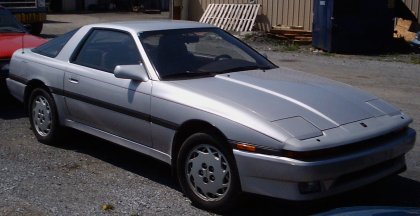
The third generation Supra was introduced in 1986.5 as a freestanding model, officially separating it from the Celica. Whereas the Celica became a front wheel drive sport coupe, the Supra retained its image as a rear-wheel drive sports/GT car. The new Supra would continue to move upscale and become a showcase for Toyota technology. Originally slated as a 1986 model, production delays caused the model to actually be introduced mid year (hence the 1986.5 designation). The all new Supra was powered by a 3.0 liter DOHC inline six-cylinder engine rated at 200 bhp. Notable features included an electronically controlled independent suspension (called the Toyota Electronic Modulated Suspension – TEMS), and a removable Sport-Roof panel (Targa top).
Production: 33,283
Engines: 3.0 I6 200 bhp.
Performance: .
1987 Toyota Supra
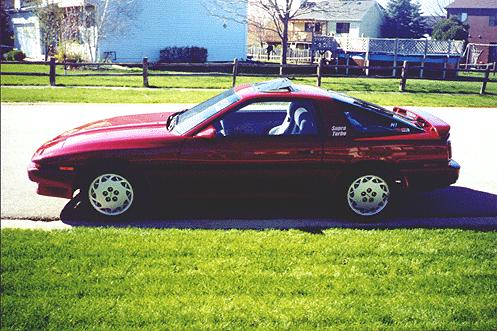
The first Supra Turbo was introduced in 1987. The inter-cooled, turbo charged version of the 3.0 liter inline 6-cylinder engine boosted power to 230 bhp and 246 lb-ft. The Turbo model also included an engine oil cooler and integrated rear spoiler. The sports package, which was standard on the Turbo and optional on the base model, included a limited slip differential (LSD), TEMS, and headlamp washers. A new Anti-Lock Braking System (ABS) was optional on both models.
Production: 29,907
Engines: 3.0 I6 200 bhp. 3.0 I6 Turbo 230 bhp, 246 lb-ft.
Performance: .
1988 Toyota Supra
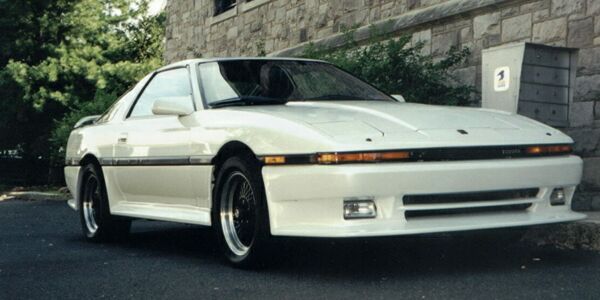
Only minor changes were in store for the 1988 Supra. The base interior was changed from vinyl to cloth. The engines received minor modifications to improve quietness. Toyota dropped the Beige/Brown two-tone paint option.
Production: 19,596
Engines: 3.0 I6 200 bhp. 3.0 I6 Turbo 230 bhp, 246 lb-ft.
Performance: .
1989 Toyota Supra
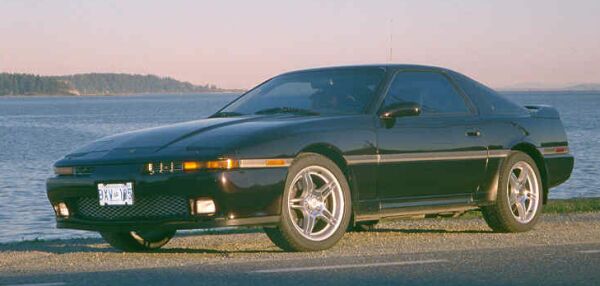
The Supra received a freshening for 1989 with a new grille, air dam, taillights, and rear spoiler. The Turbo engine was further refined with intake, wastegate, and turbo modifications, good for increases of 2 bhp and 8 lb-ft. Speed sensitive power steering was added and the rear suspension rates were increased. The cruise control moved to the steering wheel spokes.
Production: 14,544
Engines: 3.0 I6 200 bhp. 3.0 I6 Turbo 232 bhp, 254 lb-ft.
Performance: .
1990 Toyota Supra
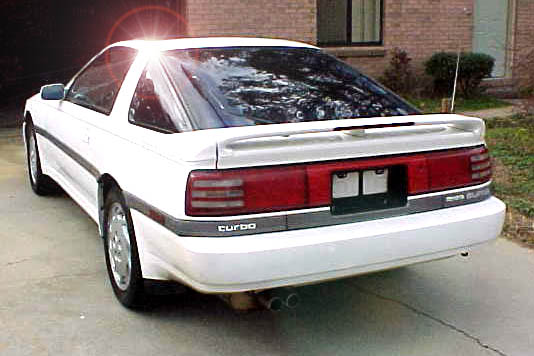
Only minor changes were in store for 1990. Toyota made a driver’s side airbag standard. The cruise control moved back to a column-mounted stalk. Fluid filled engine mounts were added for smoothness and the power steering boost was trimmed for more feel at high speeds.
Production: 6,419
Engines: 3.0 I6 200 bhp. 3.0 I6 Turbo 232 bhp, 254 lb-ft.
Performance: .
1991 Toyota Supra
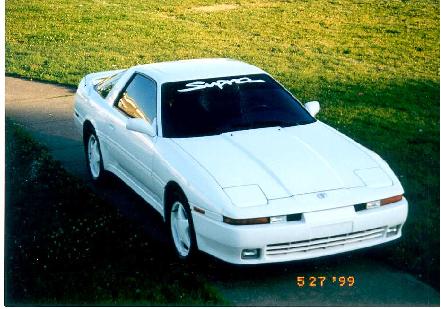
New five-spoke wheels with Goodyear GS-D Z-rated tires are made standard, along with ABS on Turbo models. Someone make an out-sliding power sunroof optional, the Sport Roof and pop-up sunroof are still available.
Production: 3,623
Engines: 3.0 I6 200 bhp. 3.0 I6 Turbo 232 bhp, 254 lb-ft.
Performance: .
1992 Toyota Supra
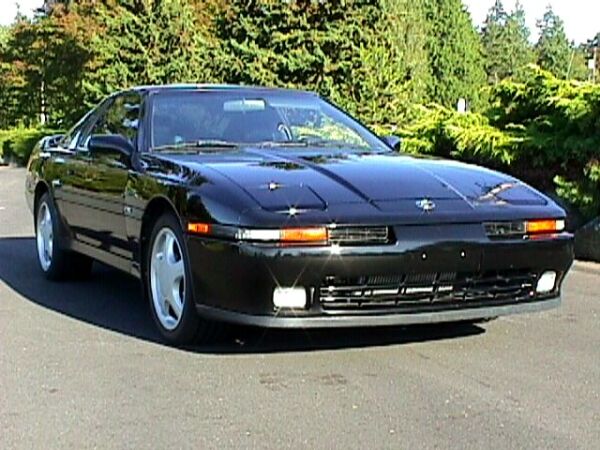
Comments: 1992 marked the last year of the third generation. Toyota revised the automatic shift points. They also made a ten-speaker stereo system with the ETR/Cassette/CD system optional.
Production: 1,193
Engines: 3.0 I6 200 bhp. 3.0 I6 Turbo 232 bhp, 254 lb-ft.
Performance: .
1993 Toyota Supra
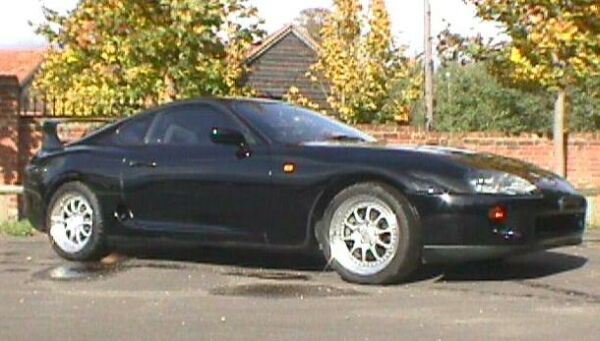
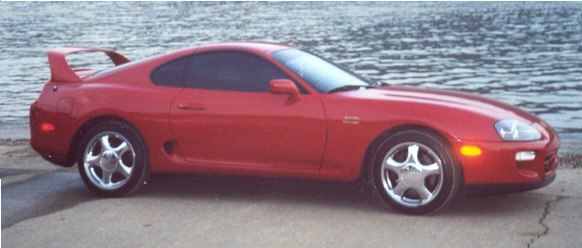
The fourth generation Supra was introduced in 1993 and firmly established the Supra as a true performance car. The standard engine was a 3.0 liter I6 rated at 220 bhp – almost the same as the previous generation’s turbo charged engine. The Turbo model added twin-turbos to produce a startling 320 bhp, the most powerful engine offered in the U.S. by any volume import manufacturer at the time. The Supra also featured new softly rounded styling and a more compact look wrapped around a 2+2 body style (though only children or small pets could ever fit in the back seat). The turbo model featured an optional, and outrageously high, spoiler that almost reached the height of the roof. Anti-lock brakes and dual air bags were standard on both models. The Turbo model also featured standard traction control and a 6-speed manual transmission.
Production: 2,901
Engines: 3.0 I6 220 bhp @ 5800 rpm, 210 lb-ft @ 4800 rpm. 3.0 I6 Turbo 320 bhp.
Performance: .
1994 Toyota Supra
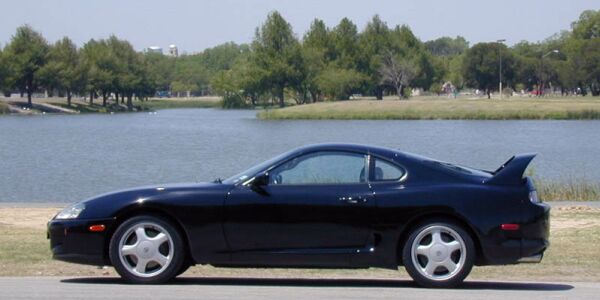
The Supra was pretty much carryover for 1994.
Production: 3,422
Engines: 3.0 I6 220 bhp @ 5800 rpm, 210 lb-ft @ 4800 rpm. 3.0 I6 Turbo 320 bhp.
Performance: .
1995 Toyota Supra
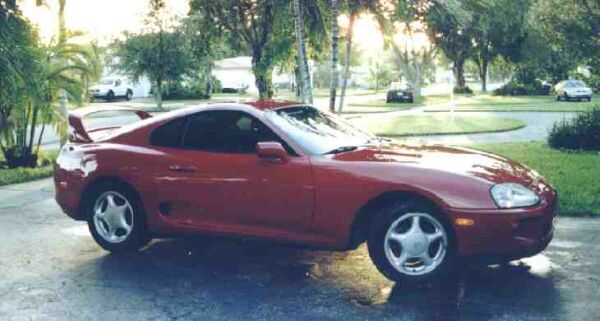
Comments: To reverse the ever-increasing price of the Supra, Toyota introduced the limited edition Supra SE, which was basically a standard model stripped of all options. Little else was changed.
Production: 2,266
Engines: 3.0 I6 220 bhp @ 5800 rpm, 210 lb-ft @ 4800 rpm. 3.0 I6 Turbo 320 bhp.
Performance: .
1996 Toyota Supra
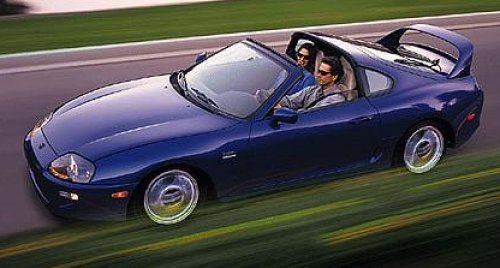
The big news was the elimination of the 6-speed manual transmission from the Supra turbo. Toyota was not able to get certification for the transmission in time to meet new on-board diagnostic system requirements for emission controls.
Production: 852
Engines: 3.0 I6 220 bhp @ 5800 rpm, 210 lb-ft @ 4800 rpm. 3.0 I6 Turbo 320 bhp.
Performance: .
1997 Toyota Supra
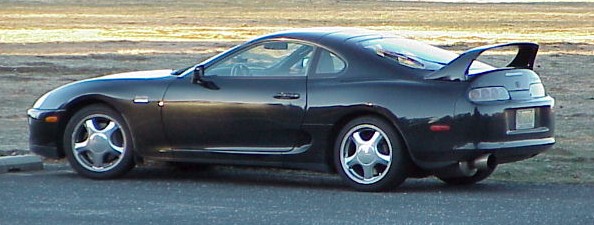
The 6-speed transmission returned for the Turbo only. All Supra’s were designated 15th Anniversary Edition, even though technically, it was the 18th edition (1979-1997). The big news was that Toyota cut Supra prices across the board by about $10,000. Thus, a 6-speed manual Supra Turbo cost just $39,900 while a Supra Turbo automatic cost $50,400 just the year before.
Production: 1,379
Engines: 3.0 I6 220 bhp @ 5800 rpm, 210 lb-ft @ 4800 rpm. 3.0 I6 Turbo 320 bhp.
Performance: .
1998 Toyota Supra
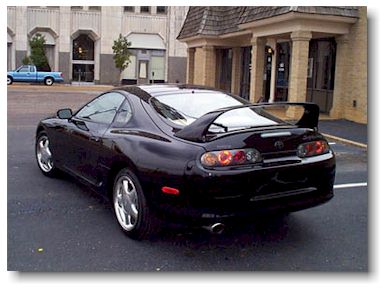
The Supra underwent a few minor changes for 1998. The exterior remained the same, except for the removal of the Anniversary emblems on the front fenders. Inside, a new 3-spoke steering wheel replaced the previous 4-spoke wheel, the cloth sport seats had a bolder design, and the radio was redesigned. The Naturally Aspirated I6 got Variable Valve Technology with Intelligence (VVT-i), which lead to an increase of 5 bhp and 10 lb-ft over the year before. The Twin Turbo I6 remained unchanged. The 5-speed manual transmission was dropped, even though the 6-speed manual was still available only on the Twin Turbo. Therefore, the base model was only available with an automatic. Faced with declining sales for Japanese super cars, this would be the last year that the Supra would be sold in the U.S.
Production: 1,232
Engines: 3.0 I6 225 bhp @ 6000 rpm, 220 lb-ft @ 4000 rpm. 3.0 I6 Turbo 320 bhp.
Performance: .